
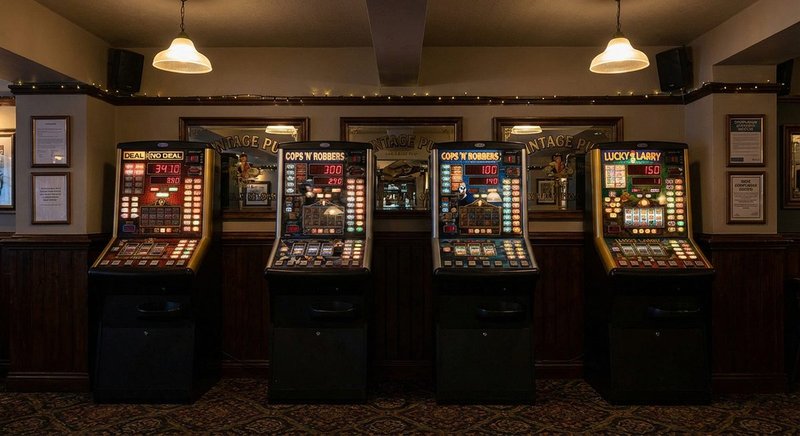
Every operator placing a gaming machine on a UK premises — whether a seafront arcade, a pub, or an Adult Gaming Centre — operates within one of the most structured regulatory frameworks in the world. The Gambling Act 2005 defines what machines can be placed where, at what stakes, and with what prize limits. Understanding these categories is not optional. It is the foundation of lawful operation.
This guide covers the full classification system as defined under the Gambling Act 2005 and the Categories of Gaming Machine Regulations 2007 (as amended), the permit and licence types that govern placement, responsible gambling obligations, and the ongoing regulatory landscape operators should monitor going into 2026.
The UK Machine Classification System: Categories at a Glance
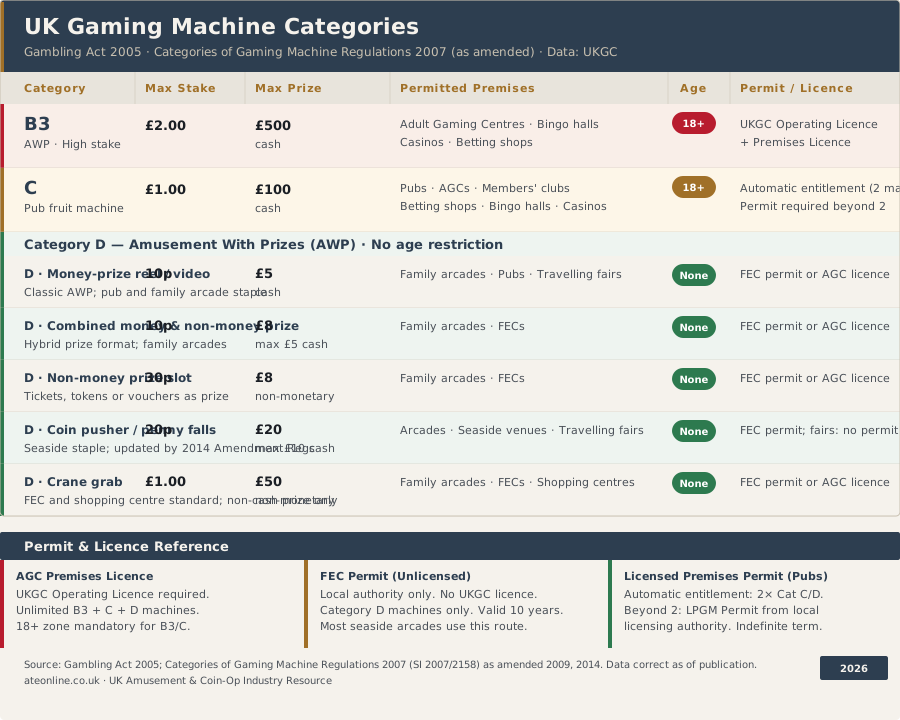
The Gambling Act 2005 assigns all gaming machines to lettered categories (A through D), each with defined maximum stake and prize limits. The UK Gambling Commission (UKGC) enforces these limits; local licensing authorities handle premises-level permits.
| Category | Max Stake | Max Prize | Typical Location | Age Restriction |
|---|---|---|---|---|
| B3 | £2 | £500 | Adult Gaming Centres, bingo halls, casinos | 18+ |
| C | £1 | £100 | Pubs, AGCs, members’ clubs, betting shops | 18+ |
| D — Money prize (AWP) | 10p | £5 cash | Family arcades, travelling fairs, pubs | None |
| D — Non-money prize | 30p | £8 non-monetary | Family arcades, FECs | None |
| D — Crane grab | £1 | £50 (non-monetary) | Family arcades, FECs, travelling fairs | None |
| D — Coin pusher / penny falls | 20p | £20 (max £10 in cash) | Arcades, seaside venues | None |
| D — Combined money & non-money prize | 10p | £8 (max £5 in cash) | Family arcades | None |
Source: Categories of Gaming Machine Regulations 2007, as amended by the Categories of Gaming Machine (Amendment) Regulations 2009 and 2014.
Category B3 Machines: High-End Stakes in Controlled Environments
B3 machines — with a £2 maximum stake and £500 maximum prize — represent the highest-stake machines legally permissible outside casinos and betting shops in Great Britain. They are a significant revenue driver for Adult Gaming Centres (AGCs) and bingo hall operators, but their placement is tightly controlled.
Only premises holding the relevant operating licence and premises licence from the UKGC may offer B3 machines. AGCs, in particular, are built around this category. Age verification is mandatory: no person under 18 may enter the B3 machine area or play these machines. Age verification requirements for arcades are covered in detail separately.
B3 and the AGC Licence
An Adult Gaming Centre licence from the UKGC permits unlimited Category B3, C, and D machines. This is the licence of choice for standalone arcades targeting adult customers. The UKGC sets technical standards for machine software and random number generators — machines must carry Technical Standards Certificates before placement.
Category C Machines: The Pub Standard
Category C covers the classic British pub fruit machine: £1 maximum stake, £100 maximum prize. These machines are restricted to adults (18+) and may only be placed in licensed premises, AGCs, members’ clubs, miners’ welfare clubs, betting shops, bingo halls, and casinos.
A pub holding an alcohol licence is automatically entitled to up to two Category C or D machines without needing a separate gaming machine permit — provided the operator notifies the local licensing authority. This automatic entitlement is widely used across the UK’s licensed trade. Beyond two machines, a formal Licensed Premises Gaming Machine Permit is required.
Category D Machines and Amusement With Prizes (AWP): The Backbone of UK Arcades
Amusement With Prizes (AWP) machines fall within Category D and are the most visible machines in the UK’s amusement landscape — from seaside penny falls to family entertainment centre (FEC) fruit machines. Unlike B3 and C machines, Category D carries no age restriction. Children can legally play them, which places specific responsible gambling obligations on operators.
Category D is itself subdivided into five types, each with distinct stake and prize limits (see table above). The key commercial variants for amusement operators are:
- Money-prize AWP: 10p stake, up to £5 cash prize — the classic low-stake fruit machine used in pubs and family arcades.
- Crane grab: up to £1 stake, up to £50 non-monetary prize — now standard in FECs and shopping centre arcades.
- Coin pusher / penny falls: up to 20p stake, up to £20 prize (no more than £10 in cash) — seaside staple, updated by the 2014 Amendment Regulations.
For a detailed breakdown of AWP machine types, specification requirements, and commercial considerations, see AWP machines explained.
Skills With Prizes (SWP): Outside the Gambling Act
Skills With Prizes (SWP) machines — where the outcome is determined wholly by the player’s skill rather than chance — fall outside the Gambling Act 2005’s definition of a gaming machine. They are not classified as Category D and are not regulated by the UKGC in the same way. Operators should note, however, that a machine marketed as an SWP must genuinely be skill-based in its payout mechanic; a machine where chance influences outcomes even partially may be classified as a gaming machine by regulators.
Licensing and Permit Framework: What Operators Need
The requirement for a permit or licence depends on the premises type and the machine categories the operator intends to offer. The framework has several distinct tiers.
Licensed Premises Gaming Machine Permit (Section 282 — Formerly Section 16)
Alcohol-licensed premises wishing to operate more than two Category C or D machines must apply to their local licensing authority for a Licensed Premises Gaming Machine Permit under the Gambling Act 2005. These permits are indefinite — they remain in force as long as the premises retains its alcohol licence and the holder remains the same. There is no annual renewal fee beyond the initial application. The permit specifies the number and category of machines permitted.
For full detail on permit conditions and common compliance issues, see UKGC AWP rules and operator obligations.
Adult Gaming Centre (AGC) Premises Licence
An AGC is a standalone premises dedicated to gaming machines. Operating one requires both an Operating Licence from the UKGC and a Premises Licence from the local licensing authority. AGC premises licences permit unlimited Category B3, C, and D machines. The UKGC sets the operating licence conditions; the local authority grants the premises licence within those parameters.
Family Entertainment Centre (FEC) Permit and Licence
Family Entertainment Centres operate under two different regulatory regimes depending on whether they offer Category C machines:
- Unlicensed FEC permit: Available from the local licensing authority. Permits Category D machines only. No UKGC operating licence required. Valid for 10 years.
- Licensed FEC (UKGC operating licence + premises licence): Required if Category C machines are to be offered alongside Category D. The UKGC operating licence is mandatory.
Most seaside arcades and family-oriented leisure venues operate as unlicensed FECs, limiting their offering to Category D only.
Travelling Fairs
Travelling fairs occupying land for no more than 27 days per calendar year may offer Category D machines without any permit, under the exemptions set out in the Gambling Act 2005. This exemption applies only to fairs — not to permanent or semi-permanent sites. Prize gaming (where a player pays to participate in a game where all players compete for a prize) is also permitted at travelling fairs within specific conditions.
The UKGC’s Role: Licensing, Enforcement, and Technical Standards
The UK Gambling Commission holds central authority over all gaming machine regulation in Great Britain (note: Northern Ireland operates under separate legislation). Its remit covers operating licences, technical standards, and enforcement action against non-compliant operators.
All gaming machines placed in licensed premises must meet the UKGC’s technical standards. These standards cover software integrity, random number generation, payout accuracy, and player protection features. Machines that do not hold a Technical Standards Certificate from an approved test house cannot legally be placed on premises for play.
The UKGC publishes its full guidance for licensing authorities, covering each premises type, machine category placement rules, and permit conditions. Operators should treat the UKGC guidance as a live document — it is updated as policy evolves and regulatory consultations conclude. As of 2025, the UKGC was in ongoing consultation on various land-based gambling measures, including Category D machine parameters.
Regulatory Consultations and Stake Limit Reviews
Stake and prize limits are not static. The UKGC and the Department for Culture, Media and Sport (DCMS) conduct periodic reviews — historically triennial, though the cadence has shifted in recent years. Operators should monitor UKGC consultation publications directly and through BACTA’s industry communications. Any proposed changes to Category D or C limits will have a direct commercial impact on FEC and pub machine estates.
BACTA: Industry Representation and Compliance Support
The British Amusement Catering Trade Association (BACTA) is the leading trade body for the UK amusements and low-stake gambling entertainment industry, founded in 1974. For operators, BACTA is both a lobbying voice in Westminster and a practical compliance resource.
BACTA membership provides access to model policies, legal guidance on permit applications, updates on UKGC consultations, and participation in the annual Safer Gambling Week. The association also operates a self-exclusion scheme on behalf of its members — allowing customers at BACTA member venues to self-exclude for a minimum of six months.
For operators new to the sector or expanding their machine estate, BACTA’s guidance on the distinction between permit types and operating licence requirements is a practical starting point. More detail on BACTA’s role and membership benefits is covered in BACTA UK: what the association does for operators.
Responsible Gambling Obligations for Amusement Machine Operators
Responsible gambling is not a voluntary add-on for licensed operators — it is a condition of holding an operating licence or premises permit. The UKGC’s Social Responsibility Code of Practice (SRCP) and the Licence Conditions and Codes of Practice (LCCP) set out what operators must do.
Challenge 25 and Age Verification
BACTA member operators enforce a Challenge 25 policy: any customer who appears to be under 25 must be asked for proof of age before accessing Category B or C machines. Adults-only areas within mixed premises (where B3 or C machines are available alongside Category D) must be physically segregated and clearly signposted. Failure to enforce age restrictions is a serious compliance breach and grounds for licence revocation.
The UKGC’s own guidance on age verification in arcades sets out the practical requirements for signage, staff training, and barrier arrangements in mixed-use premises. Age verification requirements for arcades covers the current standards in full.
Self-Exclusion and GamStop
GamStop is the national online self-exclusion scheme — it applies to UKGC-licensed online gambling operators and is not directly applicable to land-based amusement venues. For land-based exclusion, BACTA operates its own self-exclusion scheme for member venues. AGC operators holding UKGC operating licences have specific LCCP obligations around self-exclusion — they must maintain a register of self-excluded customers and take reasonable steps to prevent excluded individuals from accessing gaming machines.
Safer Gambling Signage and Staff Training
Licensed premises must display UKGC-approved safer gambling information, including contact details for GamCare and other support services. Staff working in AGCs and FECs should receive regular safer gambling training — this is an LCCP requirement for operating licence holders. BACTA’s annual Safer Gambling Week (typically held in October) provides a framework for member venues to communicate responsible gambling messages to customers.
Machine Games Duty: The Tax Dimension
Beyond UKGC regulation, operators must account for Machine Games Duty (MGD) — the tax levied on dutiable machine games in Great Britain, administered by HMRC. MGD replaced Amusement Machine Licence Duty (AMLD) in February 2013.
The standard rate of MGD is 25% of net takings (gross receipts minus prizes paid out). A lower rate of 5% applies to machines where the maximum charge to play is 20p or less (amended by SI 2014/47, effective February 2014). Most Category D money-prize AWP machines — where the maximum stake is 20p — qualify for the lower rate. Category C machines and Category B3 machines attract the standard 25% rate. Operators must register with HMRC for MGD if their machines are not exempt.
Category D non-monetary prize machines (crane grabs, non-money prize AWPs) are generally exempt from MGD, as they do not offer a cash or cash-equivalent prize that meets HMRC’s dutiable definition. Operators should verify their specific machine types against HMRC’s Machine Games Duty guidance (Excise Notice 452) annually, as classification boundaries can shift with regulatory updates.
Staying Compliant in 2026: Key Priorities for Operators
The regulatory environment for amusement machine operators in 2026 remains demanding but navigable. Key priorities based on UKGC guidance and industry developments as of early 2026:
- Review your permit type: Ensure you hold the correct permit or licence for every machine category on your premises. A Category C machine in an unlicensed FEC is an immediate compliance failure.
- Monitor UKGC consultations: Stake and prize limit reviews can affect Category D parameters. Subscribe to UKGC bulletin updates and BACTA member communications.
- Age verification procedures: Challenge 25 must be operationally embedded, not just a policy document. Staff training records should be current.
- Technical standards compliance: Ensure all machines carry valid Technical Standards Certificates. Machines from suppliers outside approved test house certification cannot be legally operated.
- MGD registration: Confirm HMRC registration status and correct rate application across your machine estate.
- Self-exclusion records: AGC operating licence holders must maintain and act on self-exclusion registers. BACTA members should be enrolled in the BACTA self-exclusion scheme.
The Gambling Act 2005 framework has proven durable — but the UKGC’s approach to enforcement has sharpened considerably in recent years. Operators who treat compliance as a back-office function rather than a front-line priority are increasingly exposed.
The regulatory principles that govern UK amusement machines — stake limits, prize caps, age controls — share their foundations with the broader UK gaming licensing framework. Operators moving from the land-based amusements sector into online or casino-adjacent operations will find the same UKGC licensing structure applies, with additional online-specific conditions under the LCCP.