
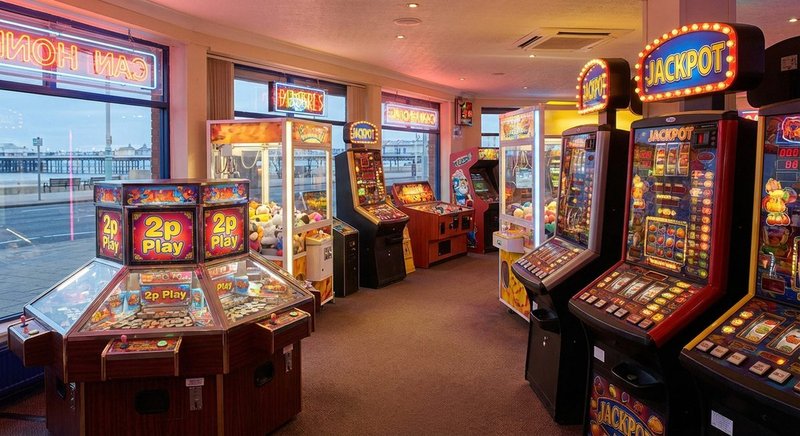
An Amusement With Prizes machine — AWP in trade shorthand — is a Category D gaming machine under the Gambling Act 2005 that combines an element of chance with a low-value prize outcome. From the mechanical fruit machines that populated pub back-bars in the 1960s to today’s touchscreen video AWPs with cashless payment modules, the category has remained the backbone of the UK’s coin-op amusements sector. Understanding what the legislation actually permits, where these machines can be placed, and how the product range has evolved is essential knowledge for any operator or manufacturer working in the space.
What Is an AWP Machine? The Legal Definition
An Amusement With Prizes machine is a gaming machine as defined under Part 10 of the Gambling Act 2005. The statutory definition turns on two criteria: the game must involve an element of chance, and participation must produce the possibility of winning a prize. That combination — chance plus prize — is what brings the machine within the regulatory framework and distinguishes AWPs from Skills With Prizes (SWP) machines, which are treated differently under the same Act.
Within the Gambling Act’s category structure, AWPs sit predominantly in Category D — the lowest-stake tier. However, the term AWP is used colloquially across Category C machines as well (the traditional pub fruit machine). For the purposes of this article, the focus is on Category D, which covers the amusements-trade staples: coin pushers, crane grabs, reel-style machines, and video AWPs found in family entertainment centres, seaside arcades, and travelling fairs.
The regulatory framework that governs these machines is administered by the Gambling Commission (UKGC). The Commission sets technical standards, approves machine designs, and enforces compliance across the supply chain — from manufacturer through to location operator.
A Brief History: From One-Armed Bandits to Video AWPs
The fruit machine arrived in the UK from the United States in the 1930s, but the modern AWP industry took shape after the Betting and Gaming Act 1960 and the Gaming Act 1968 created a clearer legal framework for low-stake amusement gaming. These early machines were fully mechanical — spring-loaded reels, gravity-fed payout chutes, and coin-on-string vulnerability that the trade spent decades engineering out.
Bell-Fruit Manufacturing Co. Ltd, founded in Nottingham in 1963, became one of the sector’s defining manufacturers. The company’s early commercial breakthrough came by pitching directly to UK breweries, customising reel strips with brewery symbols and bespoke front-glass artwork — a simple but effective piece of trade marketing that seeded machines across tied pub estates at scale. The electro-mechanical era that followed through the 1970s brought programmable hold-and-nudge features, establishing the interactive gameplay loop that still characterises British reel games today.
The move to solid-state electronics in the 1980s transformed the economics of machine development. Manufacturers including Barcrest, Maygay, and Bell-Fruit operated dedicated cabinet shops — CNC routers cutting MDF carcasses, finished in-house — alongside increasingly sophisticated PCB development teams. The Nineties introduced enhanced video display elements and multi-game platforms. By the 2010s, touchscreen-dominant video AWPs and hybrid reel-and-video cabinets had become standard new-product categories at trade shows like EAG and ATEI.
Machine Types: Four Formats Operators Need to Know
Category D covers a wider product range than many outside the amusements sector appreciate. There are four principal machine formats in active deployment across UK locations.
Mechanical Reel AWPs
The original format and still commercially relevant, particularly in traditional pub and seaside locations. Physical spinning reels, hold and nudge mechanics, and a stepped prize structure. Player-facing features such as “trail” bonus games and skill stops sit on top of a chance-determined base outcome — which is what keeps the machine firmly within gambling regulation rather than SWP territory.
Video AWPs
Touchscreen or button-panel cabinet machines that replicate reel gameplay digitally, or offer multi-game platforms across several AWP-compliant titles. Lower ongoing maintenance costs than mechanical machines, and easier to update with new game content via software. Increasingly the dominant format in FEC environments. Manufacturers such as Electrocoin — which has been active in the AWP and amusements market since 1976 — and Bell-Fruit Games (now part of Inspired Entertainment following acquisition of the Novomatic UK terminals business in 2019) lead this segment.
Skill AWPs
Machines where the player interacts during the bonus phase — pressing a stop button at the right moment, for example — but where the underlying outcome probability is set by the machine’s compensator. The skill element is real but secondary to chance in determining overall financial return. The UKGC’s technical standards cover this distinction carefully, and machine approval processes scrutinise whether a declared skill-stop genuinely affects odds or merely creates perceived agency.
Pusher and Crane Grab Machines
Coin pushers (penny falls) and crane grab machines represent the high-footfall, family-demographic end of the AWP category. Both are governed under Category D but carry distinct stake and prize sub-limits (see the regulation section below). Crane grab machines in particular have seen consistent investment in new cabinet designs, often featuring licensed entertainment IP to drive repeat play from younger demographics.
Regulation: Category D Stake and Prize Limits Under the Gambling Act 2005
The principal power to set stake and prize limits derives from Section 236 of the Gambling Act 2005. The Categories of Gaming Machine Regulations 2007 (SI 2007/2158) gave these limits their statutory form, with subsequent amendments updating the figures over time. As of publication, the key Category D sub-limits are as follows:
| Machine Type | Maximum Stake | Maximum Prize |
|---|---|---|
| Money-prize reel/video | 10p | £5 (cash) |
| Combined money/non-money prize | 10p | £8 (max £5 cash) |
| Non-money prize slot-style | 30p | £8 (non-monetary) |
| Coin pusher / penny fall | 20p | £20 (max £10 cash) |
| Crane grab | £1 | £50 |
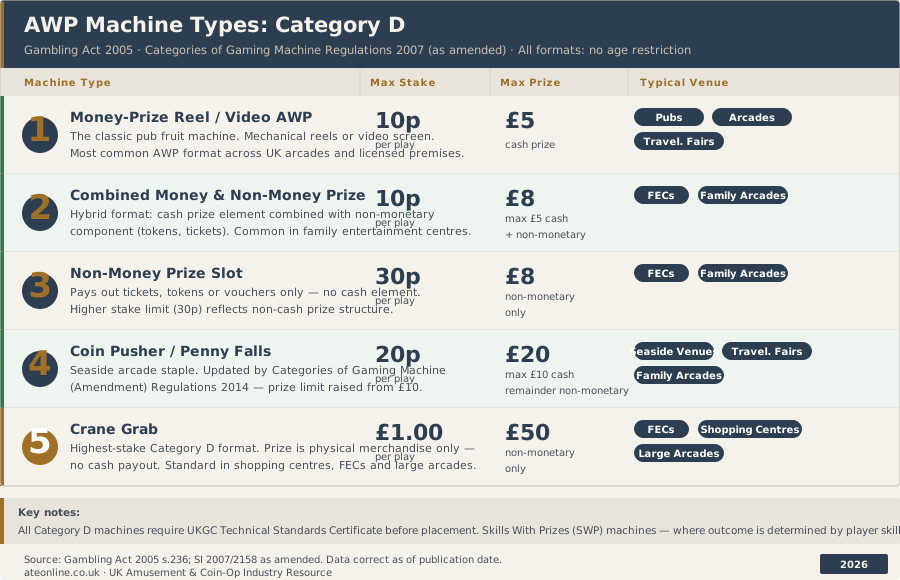
The UKGC consulted on revisions to these limits in recent years, including proposals to raise the crane grab prize ceiling to £75 and to consolidate ticket-out pusher machines with traditional pushers at a 30p stake. Operators should check the current UKGC guidance for any amendments that have taken effect after this article’s publication date.
All Category D machines require technical approval before they can be offered to the public. Machine manufacturers must submit to a UKGC-approved test house, and only machines that meet published technical standards — covering random number generators, payout percentages, and display requirements — can be placed legally. This approval process is a significant barrier to entry and a key quality-control mechanism in the supply chain.
For a full overview of the compliance framework, see our guide to UK amusement machine regulations.
Permitted Locations: Where AWP Machines Can Be Placed
The Gambling Act 2005 links permitted machine numbers directly to premises type. For AWP operators, three location categories are central to commercial planning.
Alcohol-Licensed Premises (Pubs)
Under Section 282 of the Gambling Act 2005, holders of an alcohol premises licence are automatically entitled to make available up to two gaming machines of Category C or D without the need for a separate gaming machine permit. To exercise this entitlement, the licence holder must notify their local licensing authority and pay the relevant notification fee. Premises wishing to deploy more than two machines require a Licensed Premises Gaming Machine Permit from the local authority.
Arcades: FECs and AGCs
Family Entertainment Centres (FECs) can operate Category D machines under an unlicensed FEC permit, which requires no Gambling Act operating licence. Adult Gaming Centres (AGCs) are licensed premises and can operate a wider mix of machine categories, including Category B3 through to D. The distinction matters operationally: FECs can be accessible to under-18s throughout, while AGCs must restrict access to adults. Category D machines are permitted in both environments, but the mix and placement rules differ.
Travelling Fairs
Travelling fairs occupy a specific and long-standing exemption within UK gambling law. Category D machines — and prize gaming — are permitted at travelling fairs without a premises licence provided the facilities for gambling do not form the majority of the fair’s attractions. This is an important commercial niche: the travelling fair sector remains a significant outlet for crane grabs and coin pusher machines in particular, and the regulatory carve-out reflects the historically distinct nature of fairground gaming.
AWP vs SWP: A Regulatory Distinction That Matters Commercially
The Skills With Prizes (SWP) category sits outside the Gambling Act entirely. An SWP machine is one where the outcome is determined solely by the player’s skill — with no underlying chance mechanism — and where the game operates consistently across all plays, giving participants sufficient time and opportunity to win through skill alone. Because there is no element of chance, no gambling licence or permit is required to operate an SWP.
The UKGC publishes guidance on what constitutes a genuine SWP versus a machine that merely presents a skill interface over a chance-determined outcome. The line matters because misclassification — operating a chance-based machine under the assumption it qualifies as an SWP — constitutes unlicensed gambling and carries significant penalties. Any operator considering whether a machine qualifies as SWP should seek a formal determination rather than relying on the manufacturer’s characterisation alone.
Commercially, genuine SWPs offer operators flexibility that AWPs do not: no stake or prize limits, no permit requirement, and no restricted access rules for under-18s. However, designing a machine that is genuinely skill-determined while remaining commercially viable — with sufficient prize value to drive repeat play — is technically demanding. The SWP category therefore remains a relatively niche segment compared to the established AWP estate.
Market Trends: Digital Transition and Cashless Integration
Two structural shifts are reshaping the AWP estate in the mid-2020s. The first is the ongoing transition from electro-mechanical to fully digital video AWP cabinets. New mechanical reel machines are still being manufactured and placed, but the investment in new game development is skewing heavily towards video platforms — lower tooling costs, faster content iteration, and more flexible operator configuration options are the key commercial drivers.
The second shift is cashless payment integration. Contactless and mobile wallet payment options are increasingly expected by consumers across leisure venues, and the amusements sector is responding. Cashless solution providers serving the coin-op sector — including products from Crane Payment Innovations (CPI) and venue-management platforms — are seeing growing adoption across FEC and AGC operators. The practical challenge for AWP operators is retrofitting cashless acceptance onto existing machine estates without falling foul of technical standards requirements that govern machine modification. New cabinet deployments are more straightforward, with cashless modules designed in from the hardware specification stage.
Neither trend displaces the fundamentals of the AWP business model. The Category D licence framework, the permitted locations estate, and the core gameplay formats that have driven consumer engagement for six decades remain intact. What is changing is the hardware delivery mechanism and the payment infrastructure around it.
Looking to explore how AWP-style gameplay translates to the online casino environment? The UK’s licensed online operators offer reel-based games that draw directly on the hold-and-nudge mechanics of classic AWP formats — with full UKGC oversight.