
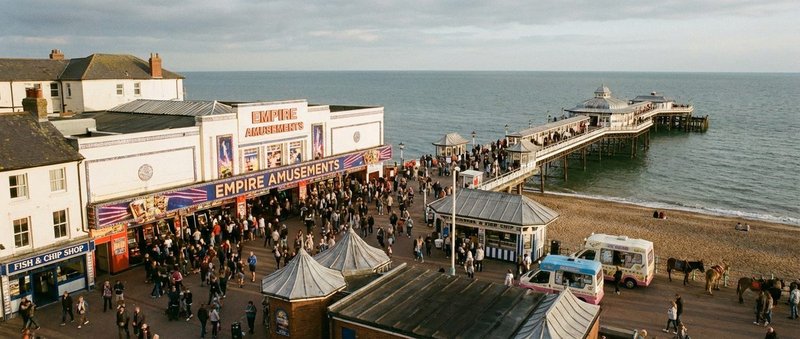
The UK amusement industry — spanning family entertainment centres, adult gaming centres, travelling fairs, pub machines and bingo clubs — remains one of the more resilient corners of the leisure sector. After the disruption of 2020–2021, operators across all segments reported a stronger-than-expected recovery through 2022 and 2023, driven by pent-up demand for out-of-home entertainment and the continued expansion of indoor Family Entertainment Centre (FEC) concepts. As 2026 gets underway, the picture is one of cautious confidence: the sector is adapting to cashless payment trends, navigating a tightening regulatory environment and facing cost pressures familiar to most hospitality-adjacent businesses.
Market Structure: Segments and Scale
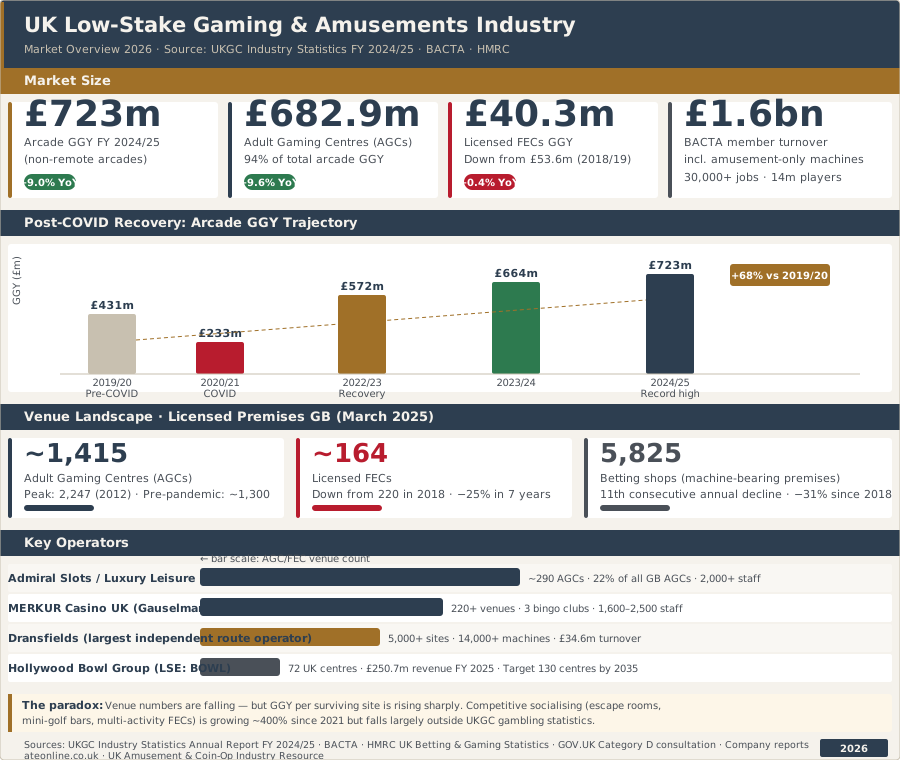
The UK low-stake gaming market is not a single industry but a collection of overlapping segments, each governed by different licensing regimes and serving distinct customer profiles. BACTA — the British Amusement Catering Trades Association, the primary trade body for the sector — represents members across all of these segments, with industry estimates suggesting thousands of amusement sites operating across Great Britain.
The main segments break down as follows:
- Family Entertainment Centres (FECs): Typically destination venues combining redemption machines, video games, prize counters and increasingly food-and-beverage offers. Operators range from large national chains to independent single-site businesses. FECs have been the growth segment of the past decade, benefiting from the shift toward experience-led retail.
- Adult Gaming Centres (AGCs): Licensed premises offering Category B3 and Category C machines, primarily Amusement With Prizes (AWP) and gaming machines. Heavily regulated under the Gambling Act 2005 and subject to UKGC licensing. AGC numbers have declined steadily from their early-2000s peak as high streets have contracted.
- Pubs and Social Clubs: The largest installed base by machine count. The typical pub holds two Category C machines under a gaming machine permit. Changes to permitted machine numbers, most recently under the Gambling Act review process, have been a persistent lobbying concern for BACTA.
- Travelling Fairs: Exempt from standard gambling licensing under the Gambling Act 2005 (travelling fair exemption), but governed by strict prize-value limits. The Showmen’s Guild of Great Britain represents this segment, which operates separately from the BACTA ecosystem.
- Bingo Clubs: Regulated by the UKGC under a separate operating licence category. Bingo clubs may offer Category B3 and C machines alongside their main bingo product. Sector consolidation continues, with the major operators — Mecca (Rank Group) and Gala — accounting for the majority of UK clubs.
- Hotels and Leisure: Hotels and holiday parks operate gaming machines under permits or licences, with coastal resort arcades historically significant. This segment has benefited from staycation trends since 2020, though inflationary cost pressures have squeezed margins.
Regulatory Framework: UKGC, BACTA and the Gambling Act
The UK Gambling Commission (UKGC) is the central regulatory authority for the sector, operating under the Gambling Act 2005. It sets machine categories, stake and prize limits, and operator licensing requirements. The UKGC publishes annual industry statistics covering licensed premises, machine numbers and gross gambling yield — the primary public data source for market sizing.
According to UKGC data, there are several thousand licensed gambling premises in Great Britain operating gaming machines, though the total number of amusement sites (including those operating under permits rather than licences) is considerably higher. The Commission’s Gambling Industry Statistics reports, updated annually, remain the most reliable public benchmark for the sector’s scale.
BACTA, founded in 1974, is the principal trade association for amusement machine operators and manufacturers. It lobbies on regulatory matters — most prominently machine category limits and stake/prize levels — and organises the EAG Expo (formerly ATEI), the industry’s primary annual trade event. BACTA membership covers operators, manufacturers and distributors. For a detailed breakdown of machine categories and what operators can legally deploy, see our guide to UK amusement machine regulations.
The British Games Alliance (BGA) represents a slightly different constituency — the broader UK games industry including video game developers and publishers — though there is overlap in areas such as loot boxes, age verification and consumer protection regulation, where the lobbying positions of amusements and video game interests sometimes converge.
Key Manufacturers Active in the UK Market
The supply side of the UK amusement market draws on both domestic manufacturers and international players with UK operations or distribution. The table below covers the principal manufacturers with a UK presence.
| Manufacturer | Headquarters | Primary Product Lines | UK Relevance |
|---|---|---|---|
| Sega Amusements International | Brentwood, Essex (UK subsidiary) | Arcade video games, racing simulators, prize machines | UK manufacturing and distribution hub for Europe; supplies FECs and arcades directly |
| Bandai Namco Amusement Europe | Hayes, Middlesex (UK office) | Video arcade, redemption, prize dispensers | Major FEC supplier; operates Namco branded venues |
| Electrocoin | Leicester, UK | AWP machines, SWP, coin mechanisms, gaming cabinets | UK domestic manufacturer; long-standing BACTA member |
| Bellfruit / SG Gaming | Nottingham, UK | AWP, Category B/C gaming machines | One of the dominant UK AWP manufacturers; significant pub and AGC footprint |
| ICE (Innovative Coin Equipment) | UK | Coin mechanisms, cashless payment peripherals, hoppers | Component supplier across the coin-op industry; critical for cashless conversion projects |
The AWP manufacturing landscape has consolidated significantly over the past two decades. Several historic UK manufacturers have been absorbed into larger groups or exited the market. For an explanation of AWP machine types, classification and technical specifications, the ATE Online guide to AWP machines covers the fundamentals.
Major Operators: Who Runs the Venues
On the operating side, the UK market is split between large national chains, regional multi-site operators and a substantial long tail of independent single-site businesses. The nationals have the capital to invest in cashless infrastructure and premium fit-outs; the independents compete on location and local loyalty.
The main national operators with significant amusements footprints include:
- Namco Funscape: Operated by Bandai Namco Amusement Europe, Namco runs a network of FEC venues at major leisure destinations including The O2 in London and Westfield Stratford City. Their venues combine arcade machines, bowling, karaoke and food-and-beverage — the integrated FEC model that has defined premium urban entertainment since the 2010s.
- Timezone: Australian-headquartered operator with a growing UK presence, focused on FEC-format venues in retail and leisure parks. Strong in redemption and ticket-based gaming.
- Tenpin: Bowling-led operator with arcade gaming as a significant secondary revenue stream across its UK estate. Listed on the London Stock Exchange; publishes results that offer one of the few public windows into UK leisure gaming economics.
- Hollywood Bowl Group: The UK’s largest ten-pin bowling operator runs arcade machines as a complementary offer. Like Tenpin, Hollywood Bowl’s annual reports provide useful publicly available data on leisure gaming performance. The group has invested in amusements refresh programmes across its estate.
Beyond these nationals, BACTA’s membership includes hundreds of independent operators — the backbone of the AGC sector and coastal arcades — whose businesses are less visible in financial reporting but represent the majority of the sector’s employment and machine count. The ATE Online Company Directory lists operators, manufacturers and suppliers active in the UK market.
Post-COVID Recovery and the Leisure Boom
The amusement sector was severely disrupted by enforced closures from March 2020. Government support schemes — including the furlough scheme and the Culture Recovery Fund — provided partial relief for operators, though the period remains the most challenging in the industry’s modern history.
Recovery from 2022 onwards was, by industry accounts, stronger than many operators had projected. Consumer appetite for out-of-home leisure experiences was robust, and FECs in particular benefited from a broader experiential leisure trend that also lifted escape rooms, crazy golf venues and similar concepts. The post-lockdown period validated the FEC model’s investment case and accelerated expansion plans that had been paused.
Adult Gaming Centres faced a more uneven recovery. Footfall in high street locations remained below pre-2020 levels in many towns through 2023, consistent with broader high street decline. Operators in coastal and resort locations fared better, supported by the staycation phenomenon of 2021–2022.
Industry bodies including BACTA have noted that the recovery period also accelerated structural changes — particularly the adoption of cashless payment systems — that were already underway before 2020.
Key Trends Shaping the Market in 2026
Several trends are materially changing how the UK amusement industry operates. Three stand out as the most significant heading into 2026.
Cashless Gaming and Card-Based Play
The shift from coin-operated to card-based and cashless gaming is the most significant operational change the sector has seen since the introduction of note acceptors. Operators are replacing coin mechanisms with TITO (Ticket In, Ticket Out) systems, NFC card readers and proprietary loyalty card systems. The commercial case is clear: reduced cash handling costs, higher spend-per-visit data and the ability to run digital promotions. The technology investment is substantial, and smaller operators face a meaningful capex hurdle relative to the nationals.
E-Gift Card Redemption
Physical prize counters are giving way — at least partially — to digital redemption via e-gift cards. Operators in the FEC segment are adopting systems that allow players to redeem ticket credits for retailer gift vouchers, online credits or charity donations. This removes stock management complexity and, for some demographics, is a more compelling prize proposition than physical merchandise.
Indoor FEC Expansion and Placemaking
Retail landlords — particularly those managing underperforming shopping centre space — have actively courted FEC operators as anchor or complementary tenants. The logic is straightforward: entertainment brings dwell time and footfall that retail alone cannot generate in the current environment. This dynamic has supported a wave of FEC openings in retail park and regional shopping centre locations over the past three years and shows no sign of slowing in 2026. The operators best placed to take advantage are those with scalable, capital-efficient formats and strong supplier relationships.
For historical context on the trade events and industry gatherings that have shaped the UK amusements sector, the history of ATEI documents how the industry coalesced around its annual exhibition from the 1950s onwards.
Low-Stake Gaming and the Online Transition
The regulatory and commercial boundary between physical low-stake gaming and online casino products is a subject of active policy discussion in the UK. The Gambling Act 2005 review process — concluded with the White Paper published in April 2023 — included measures on online stake limits and cross-channel player protection tools that directly affect operators with both physical and digital estates.
For consumers moving between physical amusement venues and online gaming environments, the product overlap is increasingly visible: online slot games regularly reference arcade and AWP mechanics, and several major online operators have explored physical presence as part of broader brand strategies. The UKGC’s approach to regulating the convergence of these two channels remains an area to watch, with affordability checks and cross-venue deposit limits under ongoing review.
Operators considering online diversification or seeking to understand the regulatory interface between their physical estate and online products should review the UKGC’s published guidance on multi-channel operator licensing, which sets out the obligations applying to businesses active in both domains.
Outlook: Challenges and Opportunities for UK Amusements
The UK amusement industry enters 2026 in reasonable health but facing identifiable pressures. On the cost side, energy prices, National Living Wage increases and the ongoing capex requirements of cashless conversion are compressing margins — particularly for smaller operators without the purchasing scale of the nationals.
On the regulatory side, the post-White Paper implementation period continues to generate compliance requirements. BACTA’s representation at parliamentary and UKGC level is broadly regarded by the industry as effective, but the regulatory direction of travel — tighter controls, more affordability monitoring, continued scrutiny of B3 machines in AGCs — creates uncertainty for investment decisions.
The structural opportunity remains the FEC model’s expansion potential, cashless technology’s ability to improve yield per machine and the sector’s relative resilience as a value-for-money leisure option in a cost-of-living squeezed consumer environment. For B2B participants — manufacturers, distributors, technology suppliers — the cashless transition represents a significant equipment replacement cycle with material revenue implications over the next three to five years.
ATE Online will continue to track regulatory developments, operator news and product launches across the sector. Companies wishing to be listed in our trade directory or submit news can use the contact form or visit the Company Directory for submission details.