
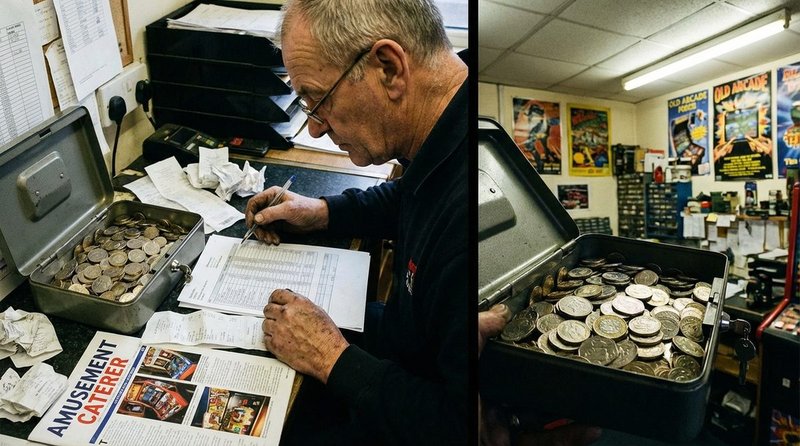
Machine Games Duty (MGD) has applied to dutiable gaming machines in Great Britain since 1 February 2013, replacing the old Amusement Machine Licence Duty (AMLD). For most arcade operators, it represents one of the most significant ongoing tax liabilities in the business — yet the rules are frequently misunderstood. This guide covers every aspect of MGD compliance, from registration through to calculating net takings and filing monthly returns, based on current HMRC guidance in Excise Notice 452.
MGD is administered entirely by HMRC, not the UK Gambling Commission. That distinction matters: UKGC handles licensing and regulatory compliance under the Gambling Act 2005; HMRC handles the tax on machine income. Both regimes apply simultaneously, but they operate through separate channels with separate obligations. Operators who confuse the two — treating UKGC licensing as sufficient compliance — can find themselves exposed on the tax side.
What Is Machine Games Duty?
MGD is a duty on the net takings from dutiable machine games — any game played on a machine for a charge, where the player can win a cash prize greater than the cost of a single play. It is levied on the person responsible for the premises where the machine is made available, typically the holder of the relevant permit or licence. HMRC collects it via monthly accounting returns.
The duty replaced AMLD, which operated on a flat annual licence fee per machine rather than a percentage of net takings. The switch to a revenue-based model aligned MGD more closely with other UK gambling duties and meant HMRC’s receipts would track machine income rather than machine count. For high-turnover arcades, that change had material P&L consequences from day one.
MGD applies across Great Britain. Northern Ireland operates under separate gaming machine legislation and is outside the MGD framework.
MGD Rates: Three Tiers, Not Two
MGD has three rate tiers. Which tier applies depends on the machine’s maximum cost-to-play and maximum cash prize — not on Gambling Act category alone, though the two systems broadly align.
| Machine Type | Max Cost to Play | Max Cash Prize | MGD Rate | Typical Machine |
|---|---|---|---|---|
| Type 1 (Lower rate) | 20p | £10 | 5% | Low-stake Category D AWP, penny falls |
| Type 2 (Standard rate) | £5 | Any | 20% | Category C pub machines (£1 stake) |
| Type 3 (Higher rate) | Over £5 | Any | 25% | Category B3 machines (£2 stake) in AGCs and casinos |
Source: HMRC Excise Notice 452; The Machine Games Duty (Types of Machine) Order 2014, SI 2014/47.
The lower 5% rate applies where the maximum charge per game is 20p or less and the maximum cash prize is £10 or less. Note that the current 20p/£10 threshold dates from February 2014, when HMRC amended the Type 1 definition upwards from the original 10p/£8 threshold that applied at MGD’s launch in February 2013. Any operator referencing the older 10p threshold should update their records accordingly.
Where a machine hosts more than one game type — for example, a cabinet running both a low-stake and a higher-stake game — HMRC applies the highest applicable rate to all takings from that machine. This rule is particularly relevant for multi-game cabinets increasingly common in Family Entertainment Centres (FECs).
For a full breakdown of gaming machine categories under the Gambling Act 2005, including Category B3, C, and D stake and prize limits, see our separate regulations guide.
Which Machines Are Exempt from MGD?
Not all machines on your premises are dutiable. A machine is outside MGD’s scope entirely if it does not offer a cash prize greater than the cost of a single play. That exemption catches a significant portion of the typical family arcade estate.
The following are generally not subject to MGD:
- Category D non-monetary prize machines: Crane grabs, soft-toy grabbers, and similar machines where the prize is always a physical item — never cash or a cash-equivalent voucher — fall outside the dutiable definition. The key test is whether any form of cash or cash-equivalent can be won; if not, MGD does not apply.
- Category D non-money prize AWPs: Machines where all prizes are non-monetary (tokens, tickets redeemable only for goods on the premises) are generally exempt, provided no cash option exists.
- Betting machines on real events: Machines facilitating betting on live sporting events are subject to General Betting Duty, not MGD.
- Bingo machines: Subject to Bingo Duty rather than MGD.
- Category B3A lottery machines: These are subject to Lottery Duty, not MGD.
- Skill-with-prizes (SWP) machines where outcome is genuinely skill-determined: Where a machine’s payout is wholly determined by player skill and no element of chance applies, it falls outside the gaming machine definition and MGD does not apply. In practice, the skill/chance boundary is contested; operators should not assume SWP status without verification.
- Machines at qualifying charitable events where net proceeds do not benefit private gain.
The practical significance for arcade operators: a typical family arcade running crane grabs and non-prize-awarding rides alongside Category D money-prize AWPs will have a mixed estate — some machines dutiable at 5%, others entirely outside MGD. Accurate machine-by-machine classification is not optional. HMRC audits can and do examine whether operators have correctly categorised their estate.
Operators should verify their specific machine configurations against HMRC Excise Notice 452 at least annually. Prize structures and machine configurations change — a software update or prize redemption feature added by a supplier can shift a machine’s MGD status. For detail on Category D AWP machines, including the distinction between money-prize and non-money-prize variants, see our equipment guide.
How to Register for MGD with HMRC
Registration is mandatory before you make any dutiable machine available for play. HMRC requires operators to register at least 14 days before placing a dutiable machine on premises. Late registration is a compliance breach — not a technicality HMRC overlooks.
The responsible person is generally the holder of the relevant Gambling Act permit or licence for the premises. In most cases that is the operator. Where premises are tenanted — for example a pub where a separate amusement machine operator has placed machines — the question of who registers can be more complex; HMRC’s guidance in Excise Notice 452 sets out the tiebreaker rules.
Registration is completed via HMRC Online Services. The application form (MGD1) covers:
- Business details and legal entity type
- The premises where dutiable machines will be located
- Anticipated accounting period start date
- Whether you require a paper return or will file online
A single registration can cover multiple premises operating under the same licence or permit holder. Operators with a large estate spread across several sites should confirm with HMRC whether site-specific sub-registrations are required or whether one registration covers all premises.
HMRC processes straightforward registrations within 14 days. Once registered, the operator receives a MGD registration number and access to online return filing. Keep this number accessible — it is required on every return and payment.
Calculating Net Takings: A Practical Guide
MGD is charged on net takings, not gross coin-in. Net takings equal gross receipts from machine play minus prizes paid out as winnings. That is the only permitted deduction — operational costs, maintenance, rental, and staff time cannot reduce the MGD liability.
For a Category D money-prize AWP running at the 5% lower rate, the calculation is straightforward in principle but can vary significantly in practice depending on payout ratio:
| Example | Gross Receipts | Prizes Paid Out | Net Takings | MGD Due (5%) |
|---|---|---|---|---|
| Low-payout AWP | £1,000 | £300 | £700 | £35.00 |
| High-payout AWP | £1,000 | £700 | £300 | £15.00 |
| Category C machine (20%) | £5,000 | £3,000 | £2,000 | £400.00 |
| Category B3 machine (25%) | £10,000 | £6,500 | £3,500 | £875.00 |
Figures illustrative only. Actual payout ratios vary by machine type and operator configuration.
For high-payout-ratio AWP machines — particularly in competitive family arcade environments where operators run generous payout percentages to maintain footfall — net takings can be substantially lower than gross coin-in. This is commercially relevant: an AWP running at 80% payout is paying MGD on only 20% of gross receipts.
Record-keeping must be per machine or per machine group, sufficient to demonstrate the gross receipts and prizes paid for each dutiable machine or group. HMRC does not mandate a specific format but expects records that can be reconciled to returns during an audit. Till rolls, electronic meter readings, and prize logs are all acceptable evidence. HMRC can and does request six years of records; document retention policies should reflect this.
Monthly Returns and Payment Deadlines
MGD returns are filed monthly. The return covers gross receipts, prizes paid, net takings, and the resulting duty for each rate tier. Payment is due simultaneously with the return — both must reach HMRC within 30 days of the end of the accounting period (or the last working day before the 30th if it falls on a weekend or bank holiday).
Key practical points on returns:
- Nil returns are required: If a machine is registered but out of service for a full accounting period, a nil return must still be filed. HMRC updated Excise Notice 452 in 2025 specifically to clarify this requirement following operator confusion.
- Online filing is standard: HMRC strongly encourages online filing via its Business Tax Account portal. Paper returns are available on request but carry a higher risk of processing delays.
- Payment by BACS or Faster Payments: Most operators pay electronically. Allow adequate banking time within the 30-day window — HMRC’s receipt date, not the instruction date, determines whether payment is on time.
- Surcharges for late payment: HMRC applies a surcharge regime to late MGD payments. A 5% surcharge applies on amounts unpaid at 30 days after the due date; a further 5% at 6 months; a further 5% at 12 months. Interest also accrues from the payment due date.
Operators running large machine estates across multiple sites should ensure their internal reporting systems aggregate machine-level data in time to compile returns before the deadline. A 30-day window sounds comfortable until site-level data collection delays compound across a large estate.
MGD Revenue: The Numbers Behind the Tax
For the financial year 2024/25 (April 2024 to March 2025), HMRC collected £609 million in Machine Games Duty — £20 million (3%) higher than the previous financial year. Source: HMRC UK Betting and Gaming Statistics, published 2025.
That figure sits within a broader UK betting and gaming duties landscape: Remote Gaming Duty (online casinos and slots) brought in £1.16 billion in the same period — nearly double MGD receipts — reflecting the continued growth of the online sector. For land-based arcade operators, MGD remains the primary duty exposure, with no online component.
The trajectory of standard-rate MGD receipts over the past five years reflects a structural shift that many in the sector tracked closely. Following the April 2019 reduction of Fixed Odds Betting Terminal (FOBT) maximum stakes from £100 to £2, betting shops redistributed machine estates and gaming spend patterns changed across the land-based sector. While FOBT operators took the direct hit, the broader effect on high-rate MGD receipts over the subsequent years is visible in HMRC’s annual series. Operators tracking their own MGD liability against industry trends should monitor the HMRC UK Betting and Gaming Statistics publication, which is updated quarterly.
For broader context on the UK amusements market and commercial trends affecting operator revenues, see our industry overview.
Key Reference: Excise Notice 452
HMRC’s definitive MGD guidance is Excise Notice 452: Machine Games Duty, published on GOV.UK. Every operator with dutiable machines should read it in full at least once and review it annually — HMRC updates it when policy changes, and the most recent revision (June 2025) included clarifications on nil returns that caught several operators unprepared.
Excise Notice 452 covers:
- Definition of a dutiable machine game and what falls outside it
- The three machine type definitions with cost-to-play and prize thresholds
- Registration obligations and the MGD1 application process
- Net takings calculation methodology and allowable deductions (prizes only)
- Record-keeping requirements and minimum retention periods
- Return filing and payment procedures
- Nil return obligations
- HMRC’s enforcement powers and the surcharge regime
The notice is not the most readable document HMRC has produced, but it is authoritative. Where any other guidance — including trade association materials or accountant advice — conflicts with Excise Notice 452, the notice takes precedence. When in doubt on a specific machine classification, contact HMRC’s Gambling Taxes team directly rather than relying on informal interpretations. Getting the rate wrong on a high-turnover B3 estate is a costly error once surcharges and interest are applied.
Frequently Asked Questions
Does MGD replace VAT on gaming machine income?
No. MGD and VAT operate independently. Following the European Court of Justice ruling in Rank Group (2011) and subsequent HMRC guidance, the VAT treatment of gaming machine income is complex — broadly, dutiable machine games are exempt from VAT, but there are exceptions and transitional rules depending on machine type and period. Operators should take specific VAT advice if unsure. HMRC’s VAT Notice 701/29 (Betting, gaming and lotteries) covers the interaction in detail.
My machine pays out tokens redeemable for prizes — is it dutiable?
It depends on the nature of the redemption. If tokens can be exchanged only for physical goods on the premises and carry no cash value, the machine is generally not dutiable under MGD. If tokens are redeemable for cash, gift cards, or cash-equivalent vouchers, HMRC may treat them as a cash prize equivalent, bringing the machine within the dutiable definition. Operators running token redemption systems should verify the specific arrangement against Excise Notice 452 or take professional advice — the boundary is not always obvious and HMRC’s position on token prizes has evolved.
Can I offset machine maintenance costs against MGD?
No. Net takings for MGD purposes means gross receipts minus prizes only. There is no deduction for maintenance, servicing, rental, commission to premises, or any other operational cost. MGD is calculated on machine income before any business expenses are applied.
What happens if I fail to register before placing a dutiable machine?
HMRC can assess MGD from the date the machine was first available for play, not the date of registration. It can also impose a penalty for failure to register on time under the Finance Act 2008 penalty regime. The penalty is behaviour-based — careless non-registration attracts a lower penalty than deliberate non-registration, but neither is zero. Operators who realise they have missed the registration deadline should notify HMRC promptly; a voluntary disclosure will reduce but not eliminate penalties.
Is MGD the same in Scotland, Wales, and England?
MGD is a UK-wide duty for Great Britain (England, Scotland, and Wales). Northern Ireland is not within the MGD framework — gaming machine taxation there operates under separate devolved arrangements. Operators with premises in Northern Ireland should take specific advice on the applicable tax regime.
Do I need to register separately for each premises?
Not necessarily. A single MGD registration can cover multiple premises if they operate under the same licence or permit holder. Operators with large multi-site estates should confirm the correct approach with HMRC, as the rules on grouped premises have nuances depending on the structure of the permit or licence held. Some operators find site-specific accounting simpler for internal reporting purposes even if a single registration covers all sites.
Where can I find the current MGD figures for the industry?
HMRC publishes quarterly UK Betting and Gaming Statistics on GOV.UK. The release includes MGD receipts alongside Remote Gaming Duty, General Betting Duty, Bingo Duty, and Gaming Duty. The FY 2024/25 total was £609 million. The statistics are freely available and updated each quarter, typically with a two-to-three month lag from the reference period end.
MGD and the UKGC licensing framework govern land-based operations — but the same regulatory logic extends online. UK casino and online slots operators hold UKGC operating licences under the same Gambling Act 2005 framework and pay Remote Gaming Duty to HMRC on a parallel basis to MGD. For operators considering or already running online-adjacent operations, understanding both regimes is essential. The UKGC’s Licence Conditions and Codes of Practice (LCCP) apply equally to licensed online operators.